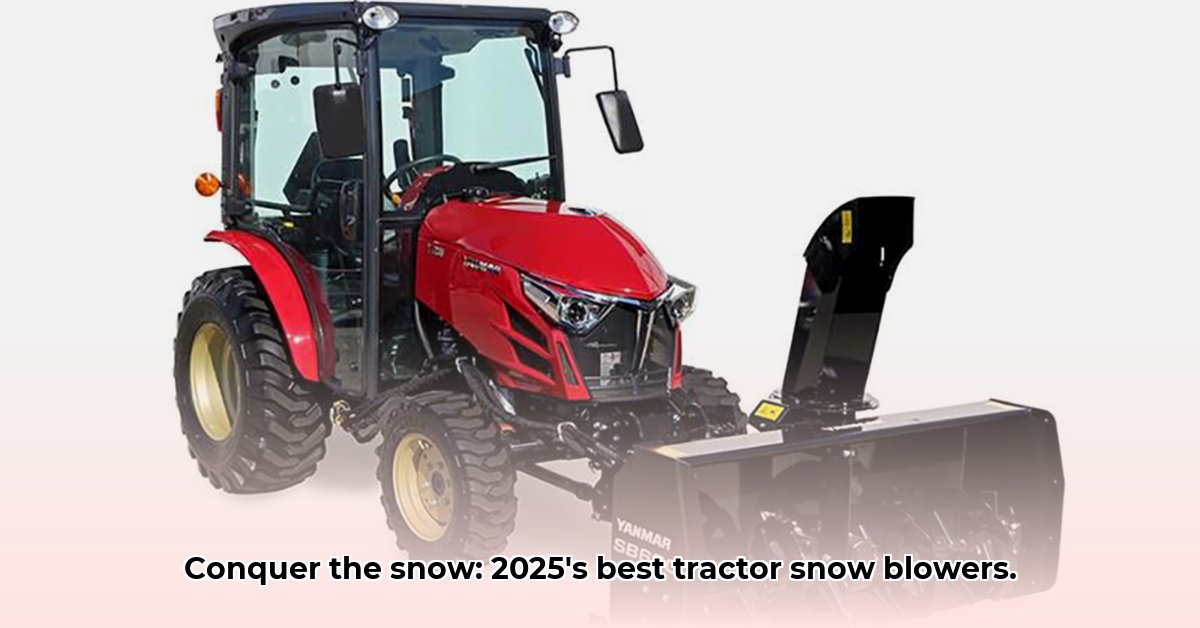
Assessing Your Snow Removal Needs: A Crucial First Step
Before investing in a large tractor snow blower, accurately assessing your needs is paramount. Failing to do so could lead to purchasing a machine that's either underpowered or vastly over-engineered for your specific application. This section will guide you through a systematic needs assessment.
First, consider the scale of your operation. How many acres need clearing? What's your average annual snowfall (in inches)? Is your terrain flat, gently rolling or extremely hilly and potentially rocky? These factors directly impact the required blower size and power. For instance, a steep incline requires significantly more horsepower than a flat field. For smaller tractors, consider compact tractor options.
Next, consider the type of snow you typically encounter. Light, fluffy snow requires less power than heavy, wet, or packed snow. The latter necessitates a more robust machine with higher horsepower and a larger auger diameter. Finally, think about the frequency of snow removal and the time sensitivity of clearing your property after a storm.
Key Features of Large Tractor Snow Blowers: A Detailed Look
Several key features differentiate large tractor snow blowers, greatly affecting both performance and total cost of ownership. Understanding these distinctions is crucial for making an informed purchase decision.
Cutting Width and Depth: Maximizing Efficiency
The cutting width (measured in feet) determines the area cleared in a single pass. A wider cut reduces clearing time, but demands more horsepower from your tractor. Similarly, cutting depth (also in feet) affects snow removal efficiency. Deeper cuts handle heavier snowfalls, but again, require more power. Finding the optimal balance between width, depth, and your tractor's capabilities is essential.
Power Source: Matching Tractor PTO to Snow Blower Demands
Most tractor snow blowers utilize the tractor's Power Take-Off (PTO) shaft to provide power. It's crucial that your tractor's PTO horsepower rating matches or exceeds the snow blower's horsepower requirement. Mismatching these can lead to consistent overloading and potential damage to both the tractor and the snow blower. Always check both specifications carefully before making a purchase.
Drive System: Gear vs. Chain – Durability and Maintenance
Gear-driven snow blowers generally offer greater durability and require less frequent maintenance compared to chain-driven models. However, chain drives can often result in a lighter-weight machine, potentially beneficial in certain applications. The choice depends on your priorities: robust longevity or reduced weight and potentially lower purchase price. Consider expected maintenance costs in your decision.
Auger Design: The Heart of Snow Removal
The auger, responsible for drawing snow into the blower, is a critical component. Look for heavy-duty augers built from durable materials capable of handling packed snow and ice without damage. A strong frame further enhances the auger’s protection and longevity. A well-designed auger system is key to efficient and reliable snow removal.
Discharge Chute: Controlling Snow Placement
A rotatable discharge chute allows you to direct the expelled snow away from sensitive areas. The discharge distance varies between models. Consider how far you need to throw the snow, a factor influenced by your terrain and surroundings. Longer throws necessitate more powerful blowers.
Comparing Models: A Step-by-Step Approach
Selecting the optimal snow blower involves careful comparison of various models based on your specific needs. This section provides a structured approach to evaluating different options:
List Your Essential Requirements: Based on your needs assessment, create a list of non-negotiable features and desirable attributes.
Gather Manufacturer Specifications: Obtain data sheets from multiple manufacturers, paying close attention to details like cutting width, depth, horsepower requirements, PTO compatibility, drive type, and price.
Create a Comparison Chart: Organize the gathered data into a table, comparing key specifications across models. This allows for straightforward side-by-side evaluation.
Factor in Maintenance Needs: Compare the projected maintenance requirements for each model. Gear-driven systems typically require less frequent maintenance than chain-driven systems but often demand more when repairs are necessary. Consider these costs over the lifespan of the equipment.
Analyze Total Cost of Ownership (TCO): TCO encompasses the purchase price, fuel costs, maintenance expenses, repairs, and depreciation. Consider which model offers the best balance between initial cost and long-term operating expenses.
Maintenance and Safe Operation: Ensuring Longevity and Preventing Accidents
Regular preventative maintenance is critical for maximizing the lifespan of your snow blower and preventing costly repairs. Furthermore, following safe operating procedures is essential for both operator safety and equipment longevity.
Preventative Maintenance: Adhere to the manufacturer's recommended maintenance schedule, lubricating moving parts, checking shear bolts, and inspecting belts regularly.
Safe Operation: Always follow the manufacturer’s safety guidelines and wear appropriate protective gear. Never operate the snow blower with damaged components.
Troubleshooting: Familiarize yourself with common problems (e.g., clogged augers, belt slippage) and their solutions.
Regulatory Compliance: Adherence to Safety and Environmental Standards
Always confirm that your snow blower complies with all relevant local, state, and federal safety and environmental regulations.
Potential Problems and Mitigation Strategies
While robustly built, tractor snow blowers are not immune to potential issues. Gearbox failures are a possibility, particularly under heavy load conditions. Shear bolts are designed to break and protect other components from damage, but they require regular inspection and replacement. Prioritize preventative maintenance to minimize such risks.
Dr. Anya Sharma, Agricultural Engineering Professor at Purdue University, emphasizes, “Regular inspections and a well-defined maintenance schedule are crucial for preventing costly downtime and ensuring the longevity of your tractor snow blower.”
This guide aims to provide a comprehensive understanding of large tractor snow blowers, facilitating informed purchasing and safe operation. Remember that thorough research and careful consideration of your individual needs are crucial for selecting the right equipment.